Illuminating Public Spaces with Modern Street Lights
Release time:2026-01-29 Click:15
Street lights are essential components of urban infrastructure, providing visibility, safety, and security for pedestrians, cyclists, and motorists during nighttime hours. Modern street lighting has evolved from simple incandescent or high-pressure sodium lamps to sophisticated systems predominantly using Light Emitting Diodes (LEDs). LED street lights offer superior energy efficiency, longer lifespans (often exceeding 50,000 hours), better color rendering, and precise optical control to direct light onto roadways and sidewalks while minimizing wasteful spill light and glare that contributes to light pollution.
The design and deployment of street lighting involve careful photometric planning. Engineers use lighting design software to model light distribution, ensuring uniform illumination meets regulatory standards for different road classes (residential, arterial, highway). The height, spacing, and mounting angle of each luminaire are calculated to achieve target illuminance levels. Modern smart street lights integrate sensors and network connectivity, enabling remote monitoring and control, adaptive dimming based on traffic or ambient light, and fault detection. This transforms street lighting from a static utility into a dynamic, data-generating component of smart city infrastructure.
Installation and maintenance of street light systems are significant municipal undertakings. It involves erecting poles, running underground electrical conduits, and installing the luminaires and control gear. Robust construction is required to withstand weather, wind loads, and potential impacts. Maintenance includes periodic cleaning of optics, checking electrical connections, and replacing failed components. The shift to LEDs has dramatically reduced maintenance frequency and energy costs for cities, offering a strong return on investment. Properly maintained lighting enhances public safety by improving visibility, reducing crime, and decreasing nighttime traffic accidents.
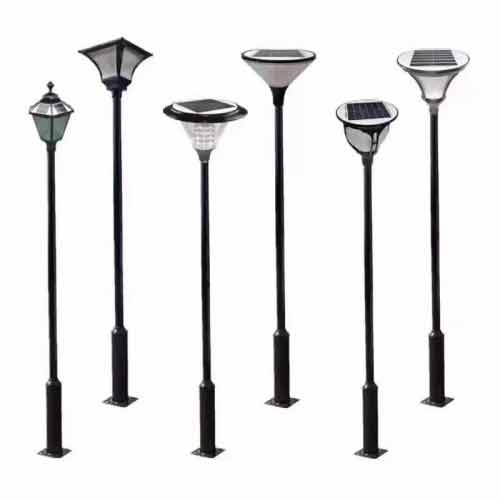
Beyond functionality, street lights contribute to the aesthetic and environmental character of a city. Decorative historical-style poles and lanterns can enhance a district’s charm, while sleek, contemporary designs signal modernity. Environmentally, by reducing energy consumption and light trespass, well-designed lighting supports darker skies and wildlife conservation. As urban areas grow, strategic street lighting planning is crucial for creating livable, safe, and sustainable communities. It is a fundamental public service that extends the usable hours of public spaces, fosters economic activity, and improves the overall quality of urban life.
Previous article:Architectural Finishing and Functional Support with a Curtain Pole
Next article:Enhancing Urban Safety and Ambiance with a Modern Street Light
Hot products
Mobile: +86 15369215227
Email:metalproducts2022@163.com
Email:1626757181@qq.com