Urban Illumination: Outdoor Light Pole Systems
Release time:2026-02-18 Click:16
The outdoor light pole is a critical component of urban infrastructure, serving not only as a support for lighting fixtures but also as a symbol of safety and civic order. These poles are engineered to withstand harsh environmental conditions, from high winds and heavy snow to salt spray and extreme temperature fluctuations. Modern light poles are typically made from galvanized steel or aluminum, chosen for their strength-to-weight ratio and corrosion resistance. The height of the pole (ranging from 6 to 12 meters for streetlights) is calculated based on the required "throw" of the light and the spacing between poles to ensure uniform illumination without creating dark spots. The design must also consider aesthetics; a poorly designed pole can clutter the visual landscape, while a well-designed one can enhance the architectural character of a neighborhood.
The construction of an outdoor light pole involves either a tapered (conical) or straight (constant diameter) shaft. Tapered poles are more material-efficient, using less steel at the top where the bending moment is lower, but they are more complex to manufacture. Straight poles are often used for high-mast lighting in stadiums or parking lots. The pole is usually anchored to a concrete foundation with a base plate and anchor bolts, designed to resist overturning moments caused by wind loads. The foundation depth is critical; in areas with high water tables, a deeper pile foundation may be required. The pole shaft often includes a "handhole" or access panel at the base for wiring connections, allowing electricians to maintain the internal components without digging up the foundation.
Installation of an outdoor light pole is a heavy-lift operation requiring cranes and certified riggers. The process begins with excavating the foundation site and pouring concrete. Once cured, the pole is lifted and positioned over the anchor bolts, which are tightened to specification. The luminaire (light fixture) is then mounted to the top using a "tenon" or slip-fitter mechanism. For areas with high wind loads, the fixture is secured with a safety chain to prevent it from falling if the mounting breaks. Electrical wiring is run through the interior of the pole (hollow poles are common) and connected to the grid, often with a photocell or timer for automated operation. In smart city applications, the pole may also house sensors for traffic monitoring, Wi-Fi hotspots, or surveillance cameras, transforming it into a multi-functional "smart node."
Maintenance of an outdoor light pole focuses on the longevity of the coating and the electrical components. Galvanized steel poles rely on their zinc coating to prevent rust; if the coating is damaged during installation (scratches from rocks or tools), it must be touched up with zinc-rich paint to prevent "white rust" (zinc corrosion products). Aluminum poles naturally form an oxide layer but may require anodizing for extra protection in coastal areas. The light fixtures themselves (LEDs are now standard) have a lifespan of 50,000+ hours but may need cleaning to remove dust or bird droppings that reduce light output. Ballasts and drivers in older fixtures are prone to failure and must be replaced. For decorative poles with historic finishes, sandblasting and repainting may be necessary every 10-15 years to preserve their appearance.
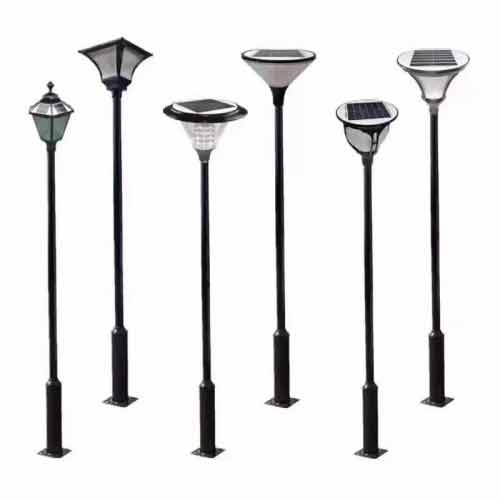
Finally, the evolution of the outdoor light pole reflects broader trends in energy efficiency and urban design. The shift from high-pressure sodium lamps to LED technology has reduced energy consumption by up to 70%, allowing for smaller poles or wider spacing. "Dark sky" compliant fixtures direct light downward to reduce light pollution, a growing concern for astronomers and wildlife. The pole itself is becoming a platform for renewable energy, with some models integrating solar panels on top to power the light or feed excess energy back into the grid. In public spaces, the design of the light pole contributes to "place-making"—creating a sense of security and community. Whether illuminating a highway or a pedestrian plaza, the outdoor light pole remains a silent sentinel, blending engineering rigor with the human need for visibility and safety in the built environment.
Previous article:Illuminate Gardens Beautifully with Garden Lamp
Next article:Professional Sports Field Light Pole for Stadium Illumination
Hot products
Mobile: +86 15369215227
Email:metalproducts2022@163.com
Email:1626757181@qq.com